Urban Mobility, Humanitarian Projects and Energy Security - the Second Day of the Delegations of the Twin Cities of Karlsruhe and Nancy Visit
02 June 2025, 11:10
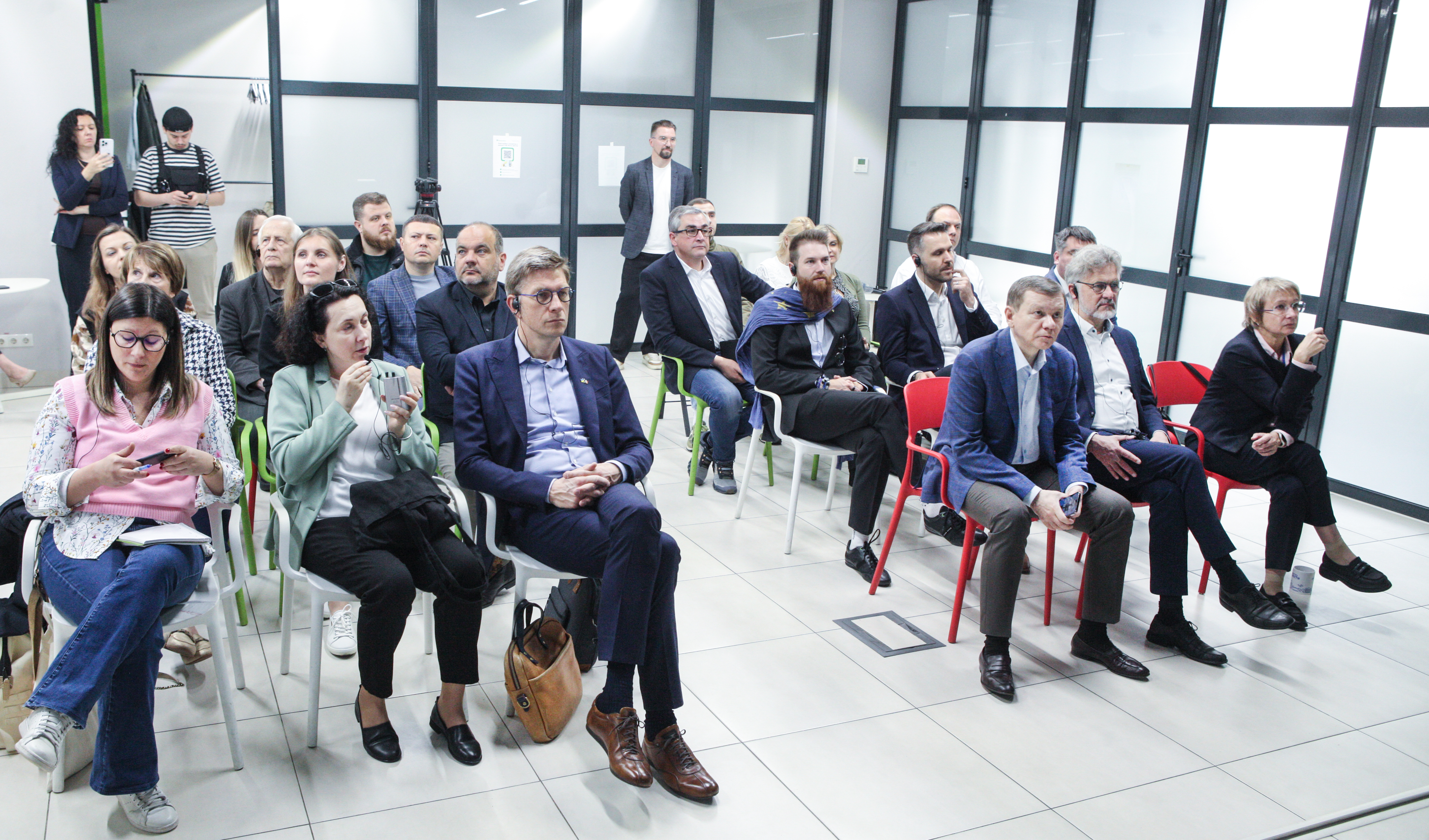
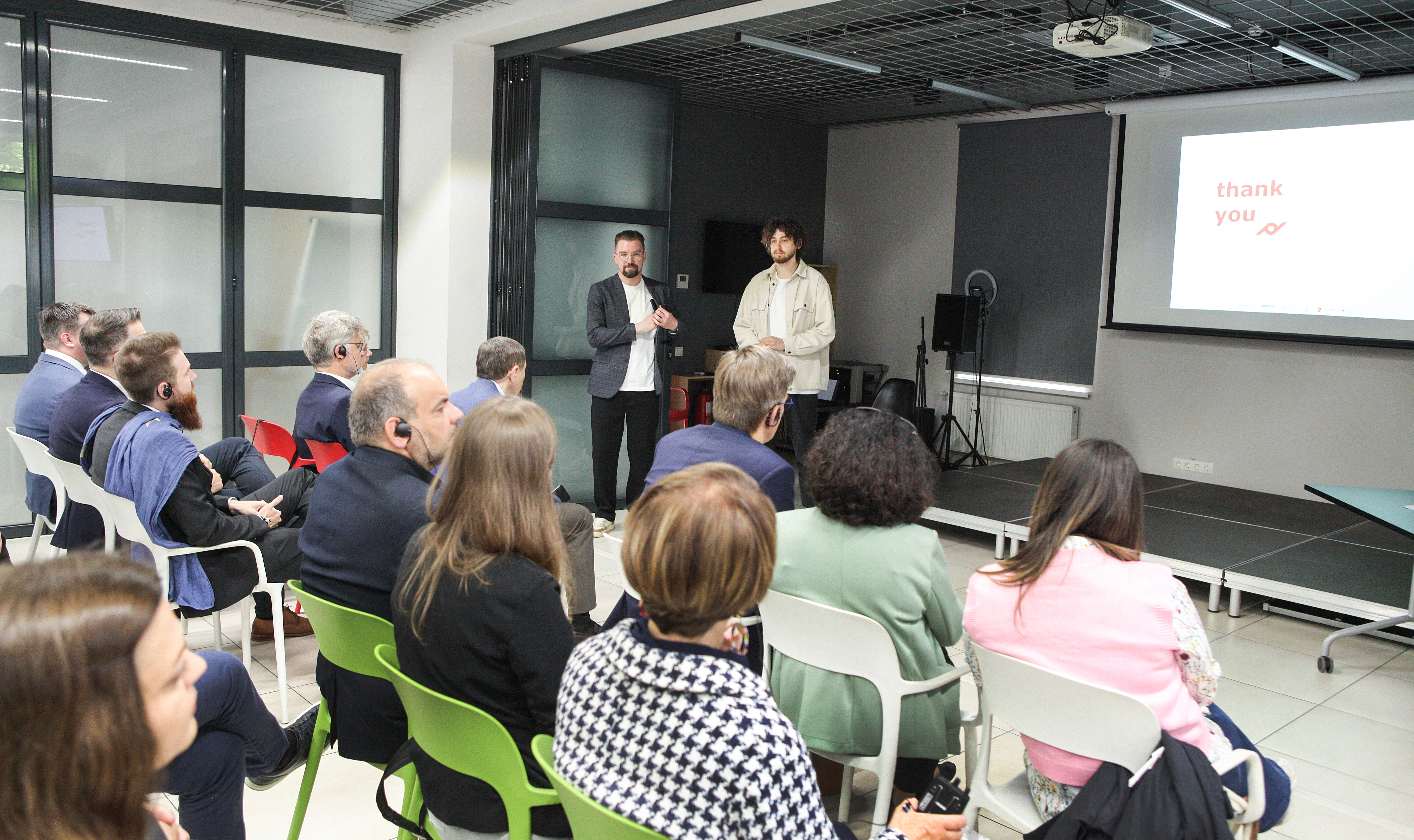
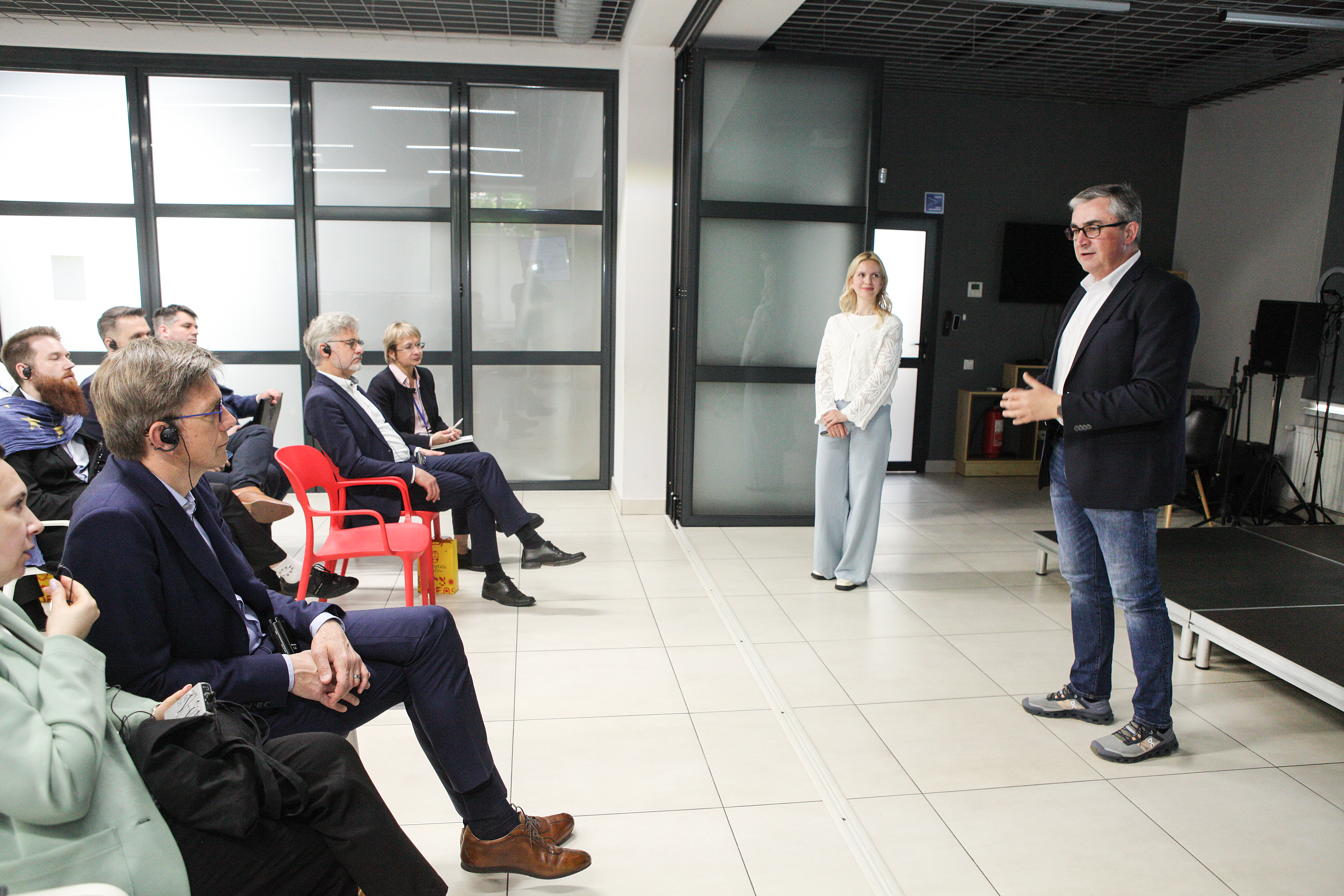
The morning for the European guests began at the City of Meaning HUB, where the interim results of the project ‘Improving the Quality and Efficiency of Urban Public Transport in the Centre of Vinnytsia / Ukraine’ (Nakopa) were presented. Its goal is to implement organisational, structural, and technical measures aimed at reducing car traffic on Soborna Street with a shift in emphasis to public transport and generally improving urban mobility, making it more environmentally friendly and safe. Karlsruhe has similar experience and is willing to share it. This project is the result of close cooperation between our municipalities and is being implemented with funding from German partners.
‘We have been working on this important project for the city of Vinnytsia for a year now, and Karlsruhe experts have been actively involved in communication. A lot has changed during this time. We have collected analytics, worked out proposals for test solutions that we can already implement. We also hold a lot of participatory events - conferences, workshops, etc. We have also engaged independent experts to join the working team. Currently, we already have a vision for the Mobility Concept, and then we will move on to more specific work: modelling the territory and sketching individual nodes. We would like to thank the city of Karlsruhe, with whom we are in contact 24/7, receive support, and hope that this pace will not slow down in the next two years of the project,’ said Serhii Yakivchuk, manager of the Spatial Development Agency.
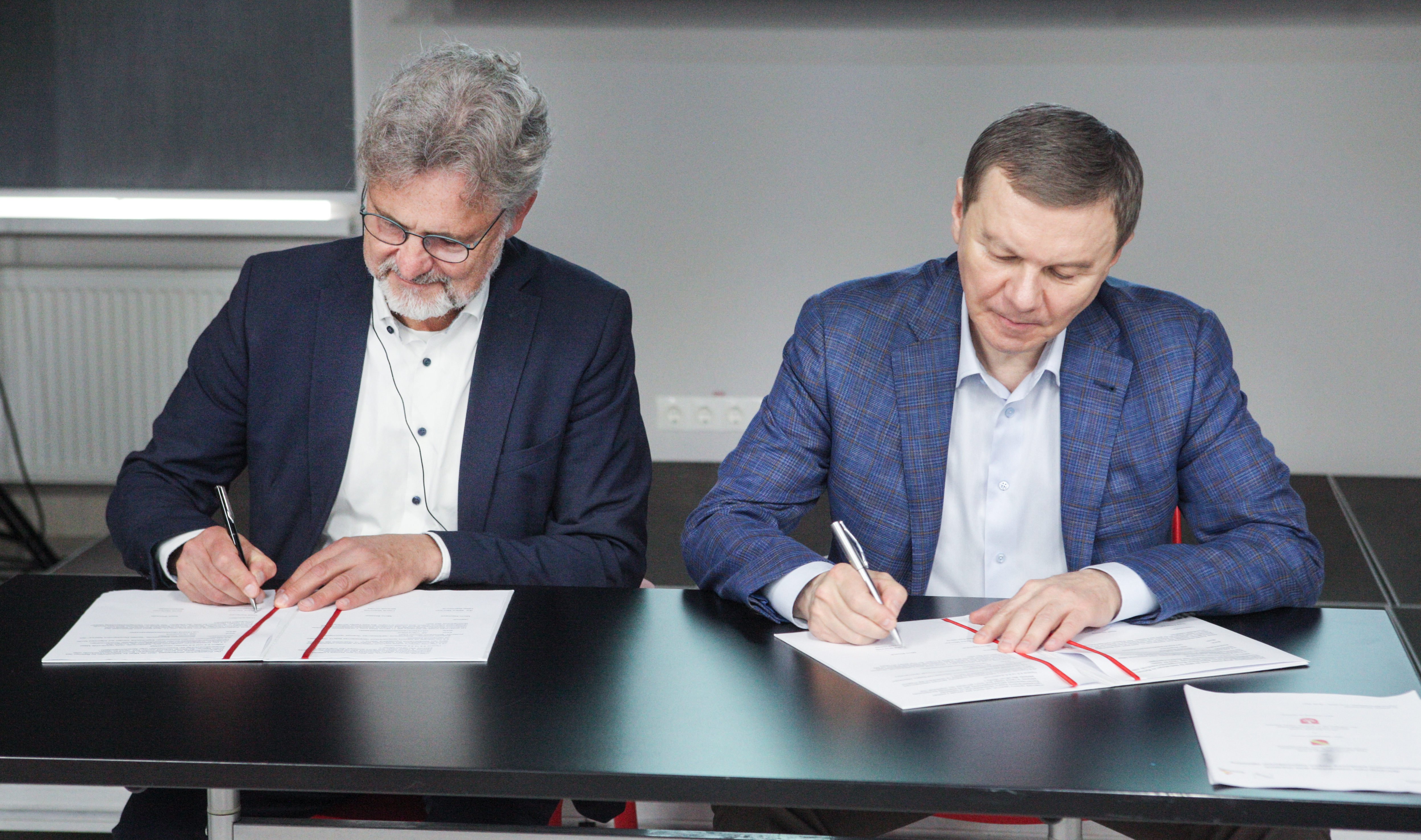
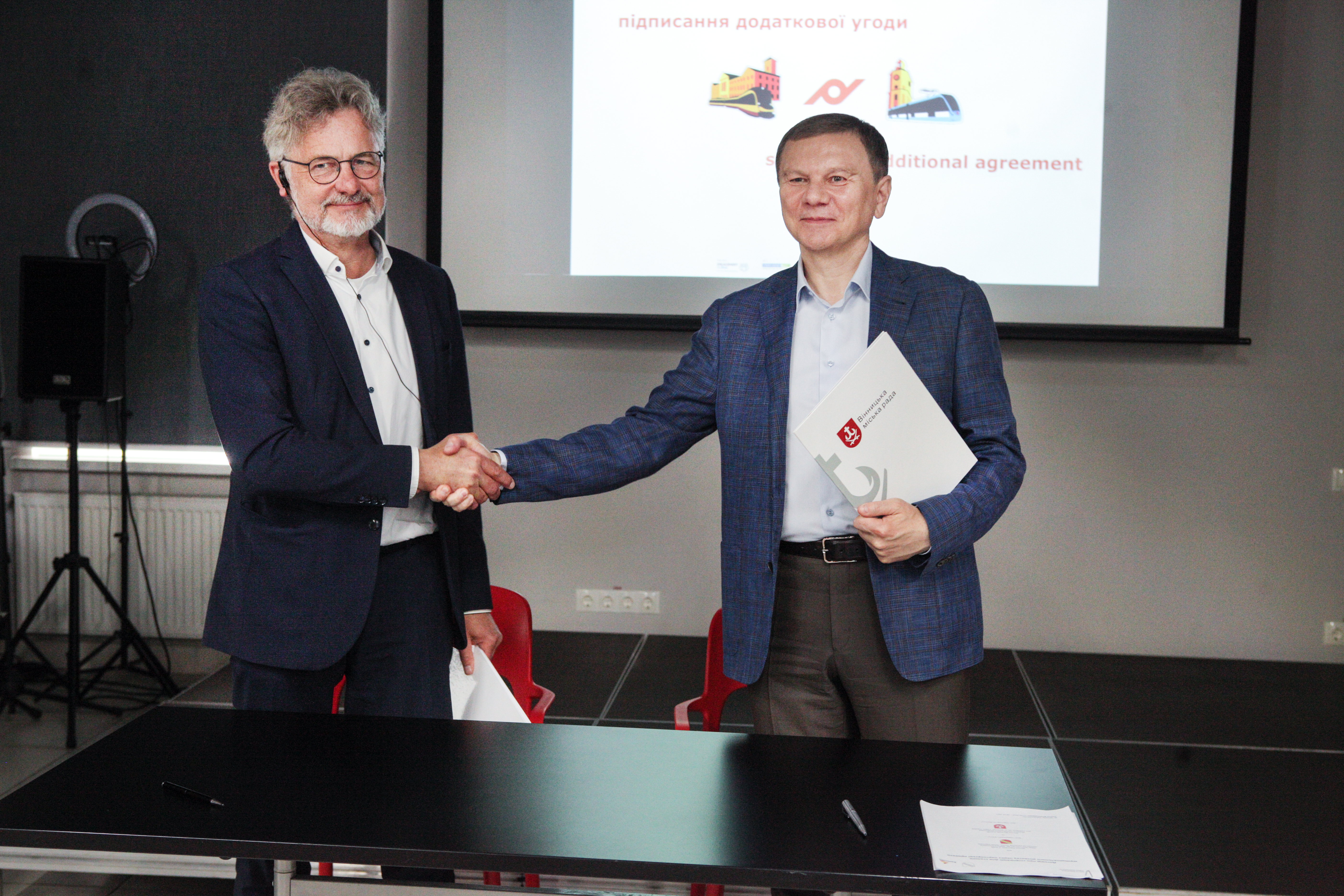
To this end, today Vinnytsia Mayor Serhii Morhunov and Mayor of Karlsruhe Frank Mentrup signed an additional agreement that will allow for faster implementation of the next phases of the project related to modelling and testing of specific solutions. The Mayor of Nancy, Mathieu Klein, also expressed his readiness to provide expert assistance in the project implementation.
‘The Nakopa project is relevant for our city, as well as for any city in Europe. It is about mobility, about how quickly you can get from point A to point B, how convenient public transport will be. But this is a rather complicated process, given Vinnytsia's transport network and the number of cars that has grown significantly over the past 3-4 years. That is why we are working quite seriously with German experts and today we received a proposal from Mathieu Klein, Mayor of Nancy, to engage French experts to build a strategic vision for urban mobility transformation and its implementation, in particular on Soborna Street,’ said Serhii Morhunov, head of the community.
Later, the Hub hosted another meeting with Olha Oliinyk, acting delegate of the Local Democracy Agency in Vinnytsia Region, LDA Vinnytsia. They discussed opportunities for cooperation and networking to implement various projects: humanitarian, social, educational, etc.
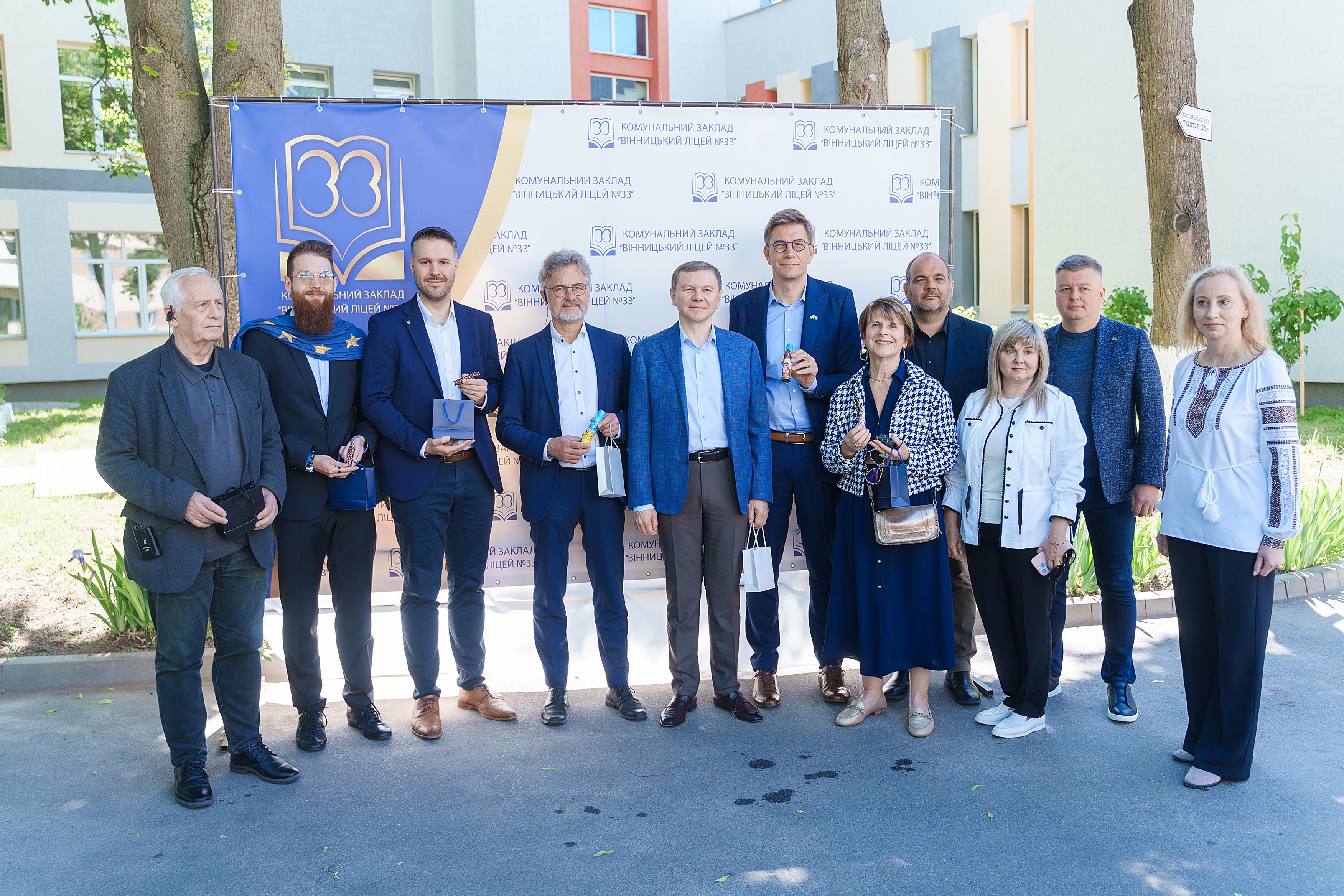
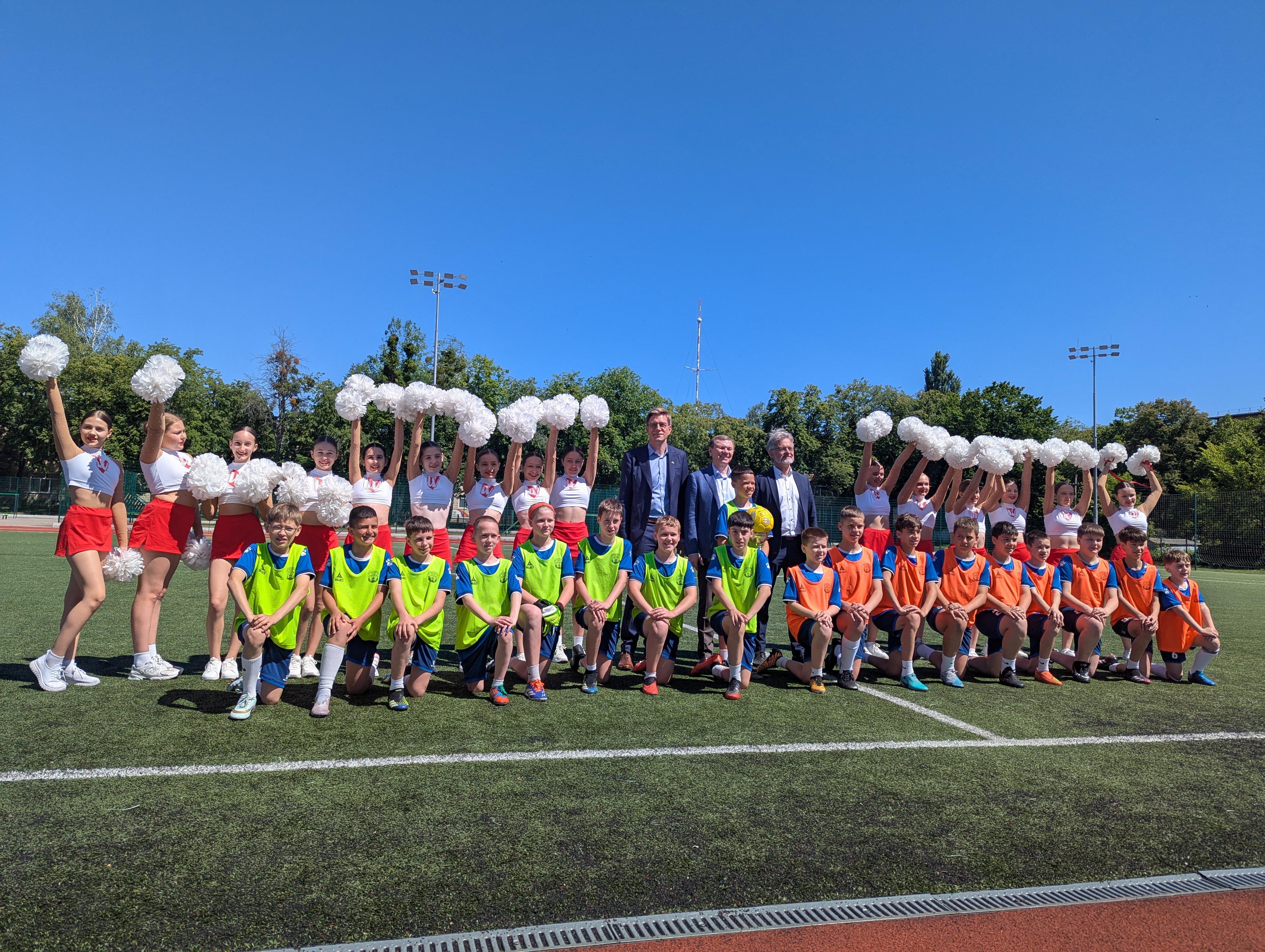
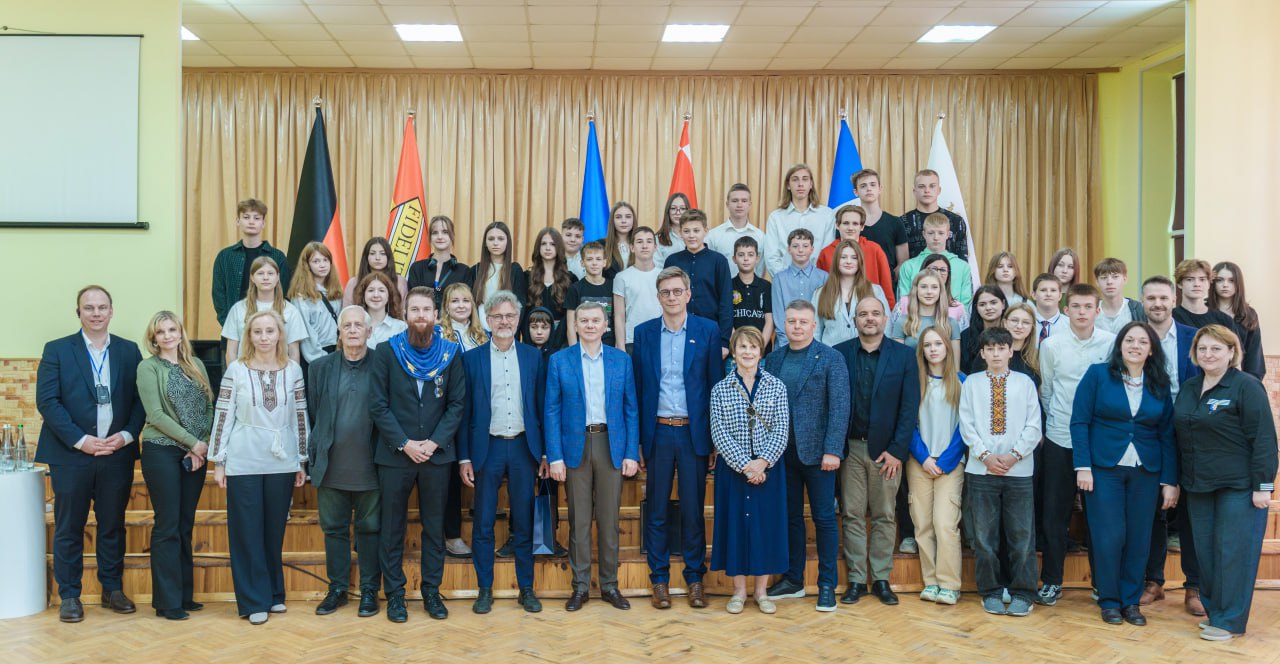
The programme continued with a visit to Lyceum No. 33, where students from Vinnytsia schools were waiting for the guests. Some of them have already had the opportunity to go on holiday to Karlsruhe and Nancy and improve their foreign language, and some of them will have their dream come true soon.
‘Just yesterday, we agreed with Mayors Frank Mentrup and Mathieu Klein that their cities would continue the programme of receiving children from Vinnytsia. First of all, from the families of servicemen, our fallen heroes and heroines, and IDPs. The only requirement is that they should know foreign languages. We are going to form such groups and thank our partners and friends who are willing to help children with a big heart and sincerely want to help them so that they can reboot morally and take a break from the war for a short period of time,’ said Serhii Morhunov.
The lyceum organised various activities for the guests, during which they could get to know the students in an informal atmosphere and learn about life and learning in war.
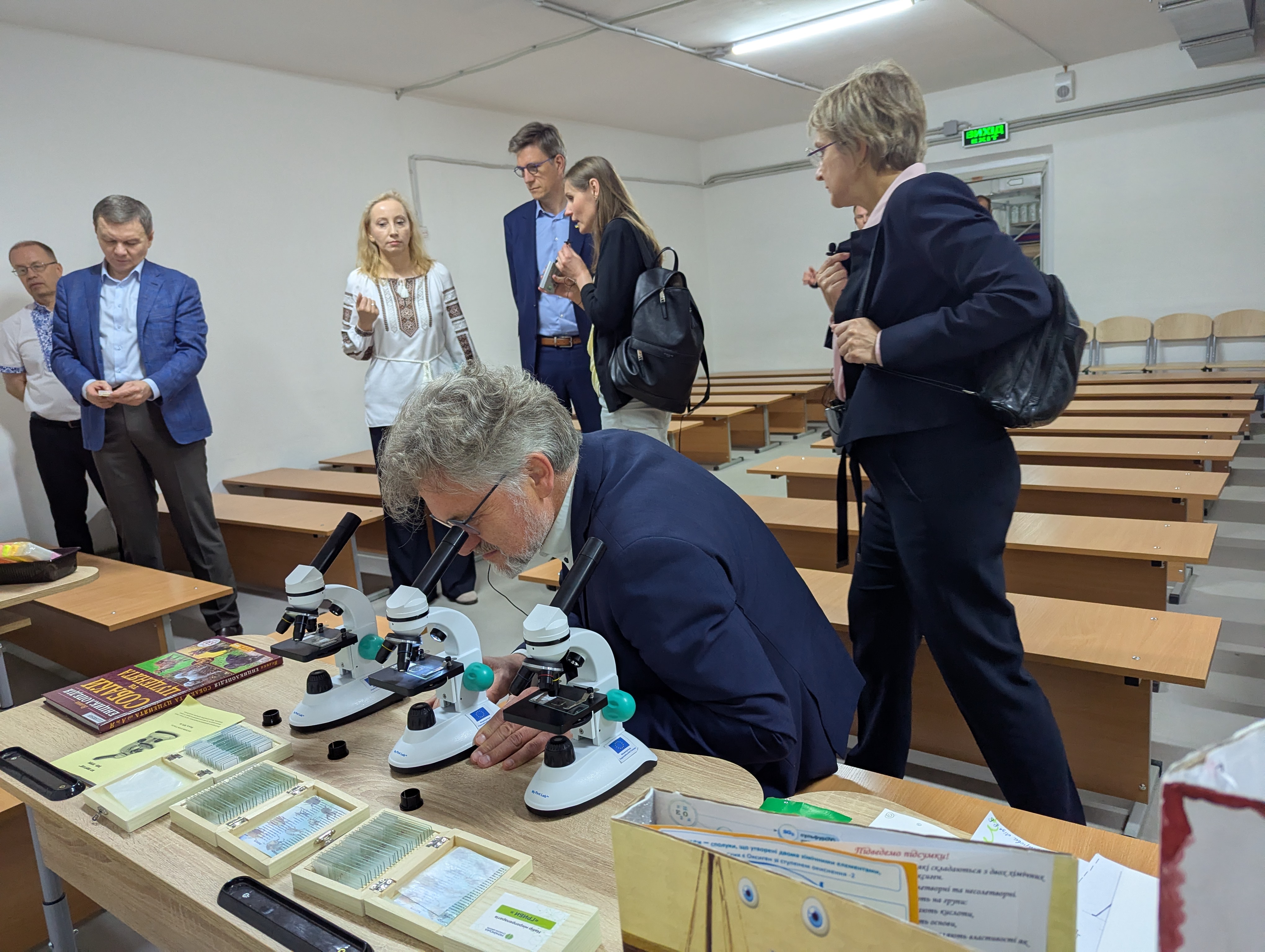
The representatives of the delegations were given a tour of the lyceum by Vinnytsia Mayor Serhii Morhunov. They saw the spacious classrooms, which are not much different from those in Europe: the same desks, blackboards, and technical equipment, some of which were updated thanks to the support of the twin cities of Karlsruhe and Nancy. We also visited the newly built anti-radiation shelter, which resembles an underground school in its arrangement, but contrasts so much with the notions of the seemingly unshakable norms of the civilised world, where there should be no military threats, no danger to the lives and health of children.
Unfortunately, other norms now prevail in Ukraine, according to which shelter is synonymous with rescue. In Vinnytsia, 6 such facilities have been built from scratch for educational purposes in schools, 2 in kindergartens, and 4 more are under construction. In addition, Serhii Morhunov noted that our community was the first in Ukraine to introduce an automatic door opening system for unimpeded access to shelters. A total of 85% of the protective premises are currently equipped with such locks.
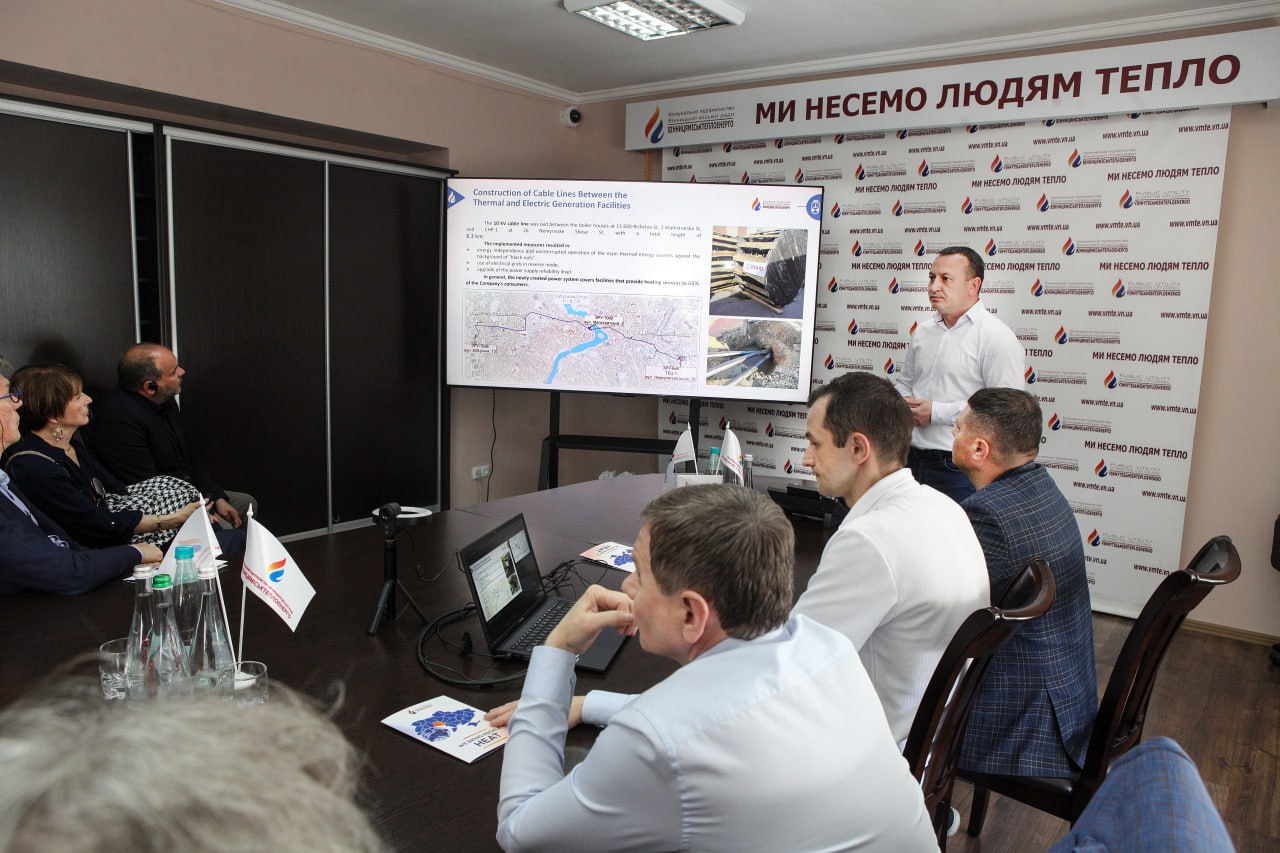
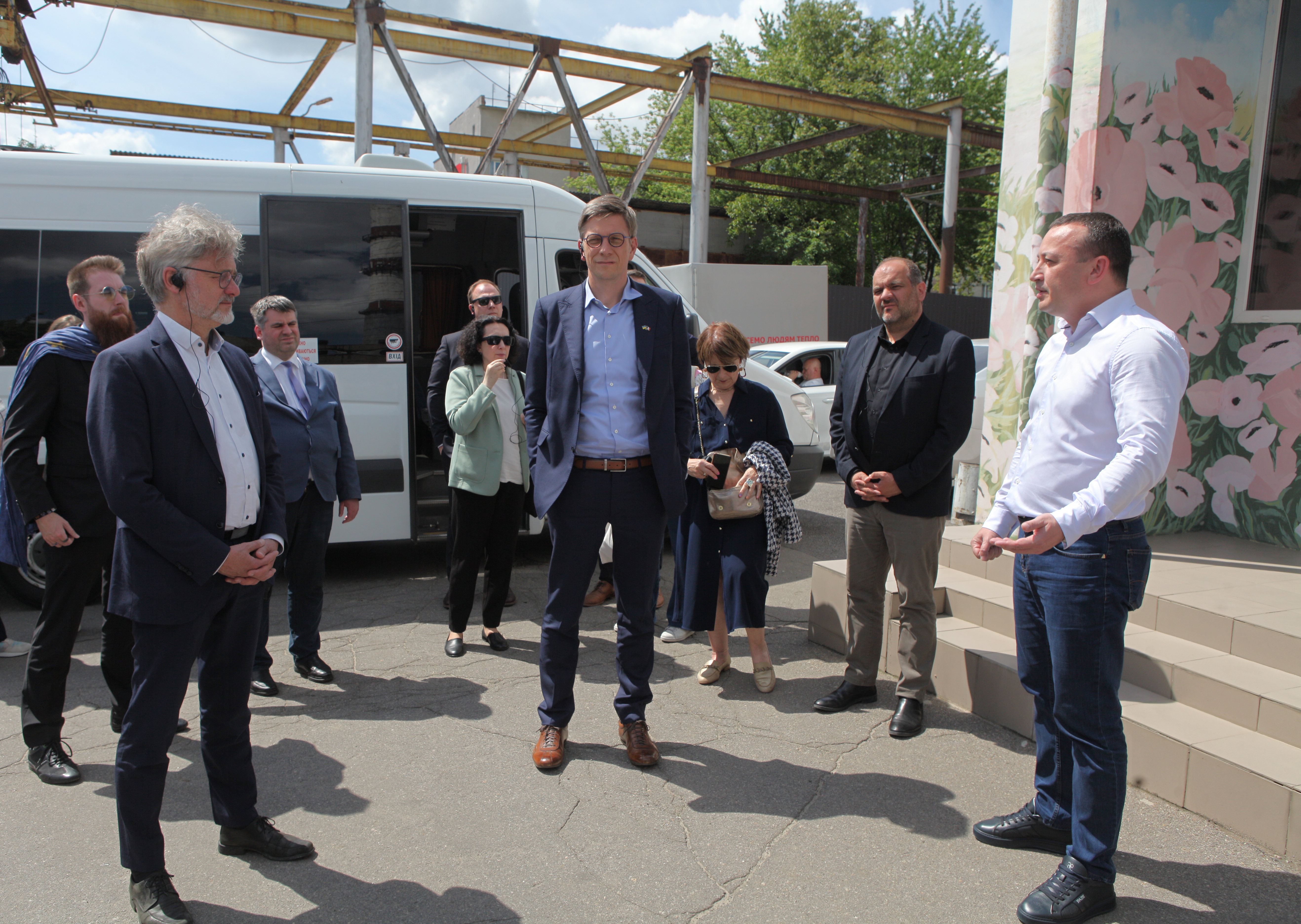
Generators have also become a necessity, allowing us to stay in the light. All communal facilities in the community have them. Another thing is cogeneration units, which are capable of simultaneously generating electricity and heat, ensuring autonomous operation of boiler houses in blackouts. In Vinnytsia, with the help of international donors, five such units were installed. The delegations were able to learn about the benefits of this equipment and other steps taken by the community on the way to energy independence during a visit to one of the largest boiler houses of the city's heat supply company, which is one of only three in Ukraine that provides hot water supply all year round.
‘In 2022, we faced a big challenge: how to not only preserve the district heating system but also provide services to our customers. Thanks to the assistance of the city authorities and an understanding of the criticality of the situation that could occur and the need to anticipate all possible risks, our company was the first in Ukraine to provide all boiler houses and heat supply points with generators. However, this is an emergency power source that does not give confidence in the long heating season. That's when we, together with the city council and international partners, began to create our own independent power supply system for the enterprise, which would enable us to operate separately from the country's general energy system. Currently, we have installed 5 kW cogeneration units and created a so-called energy island,’ said Maksym Bilyk, CEO of Vinnytsia City Heating Company.
However, Vinnytsia is not going to stop there and is ready to go even further in introducing alternative energy sources, even those such as recuperation.
‘What impressed me the most was faith in the future and optimism. It is the ability to do something modern and innovative in difficult circumstances. We have seen how the energy system is being modernised, how a new cardiology centre is being built, how schools are being modernised and thermally upgraded, how new public spaces are being created and planned, and how we are able to find solutions that even we do not always have,’ said Frank Mentrup, Mayor of Karlsruhe. This deserves deep respect and our complete admiration.’
The Mayor of Nancy, Mathieu Klein, also expressed his thoughts: ‘Despite the fact that there is a war going on, Vinnytsia is developing and changing rapidly. Yesterday's presentation of the Crystal Technology Park is a good example. A year ago, we inspected the construction site, and now we see the opening of this space. Next, we saw the Cardiology Centre, which was not in operation a year ago. We feel so much energy in Vinnytsia, the energy of a city that is developing and growing, and we are impressed.’
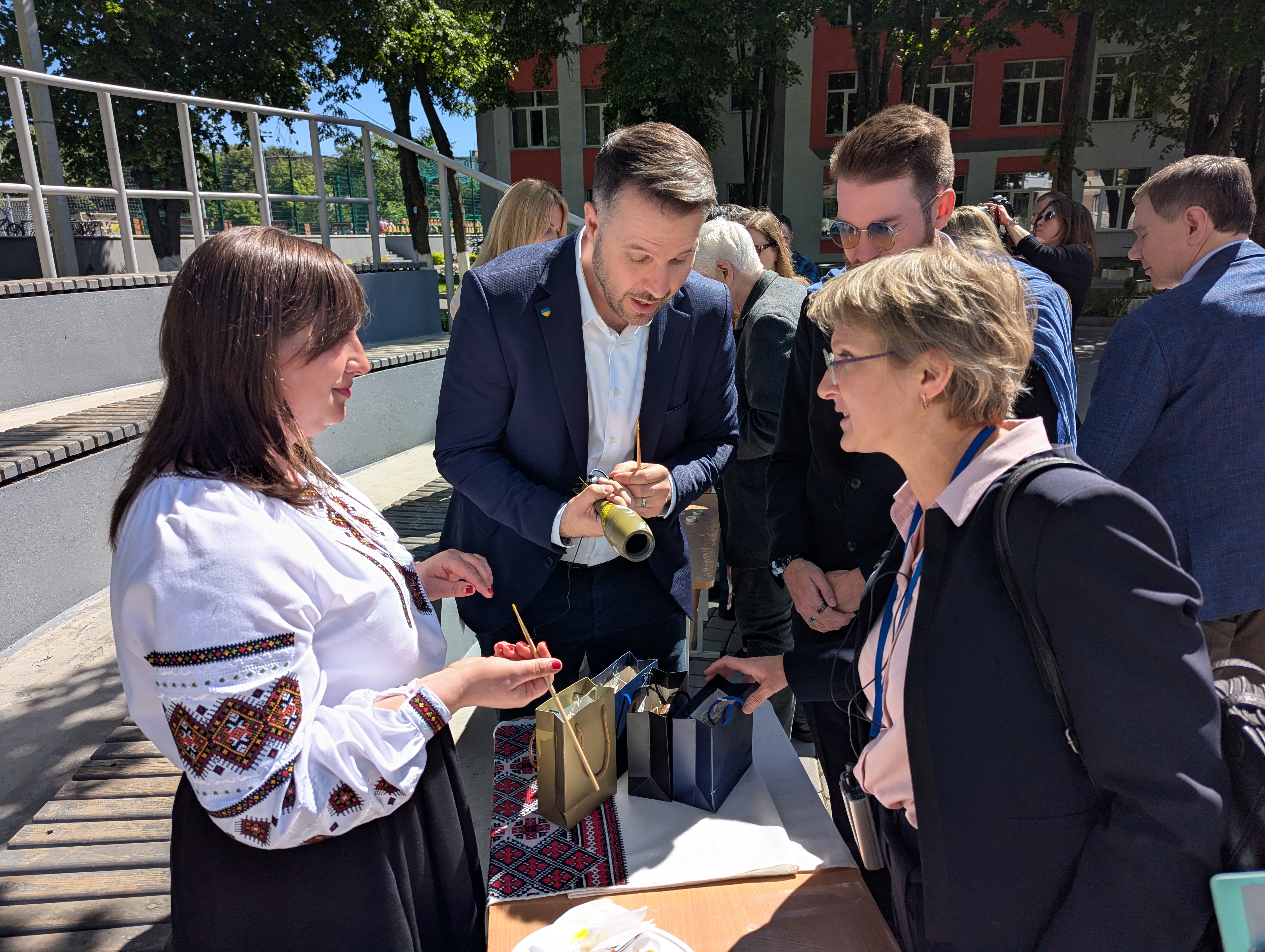
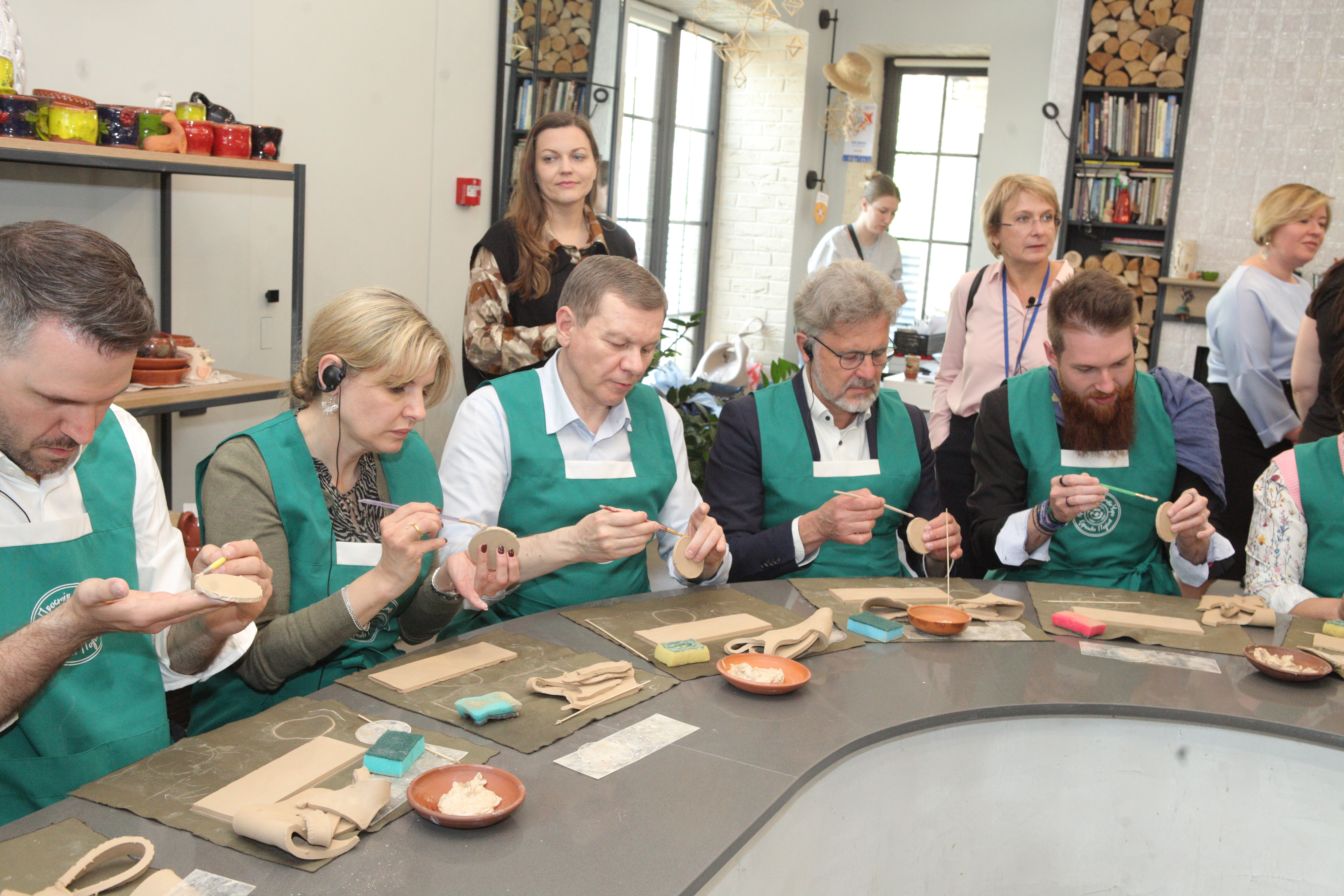
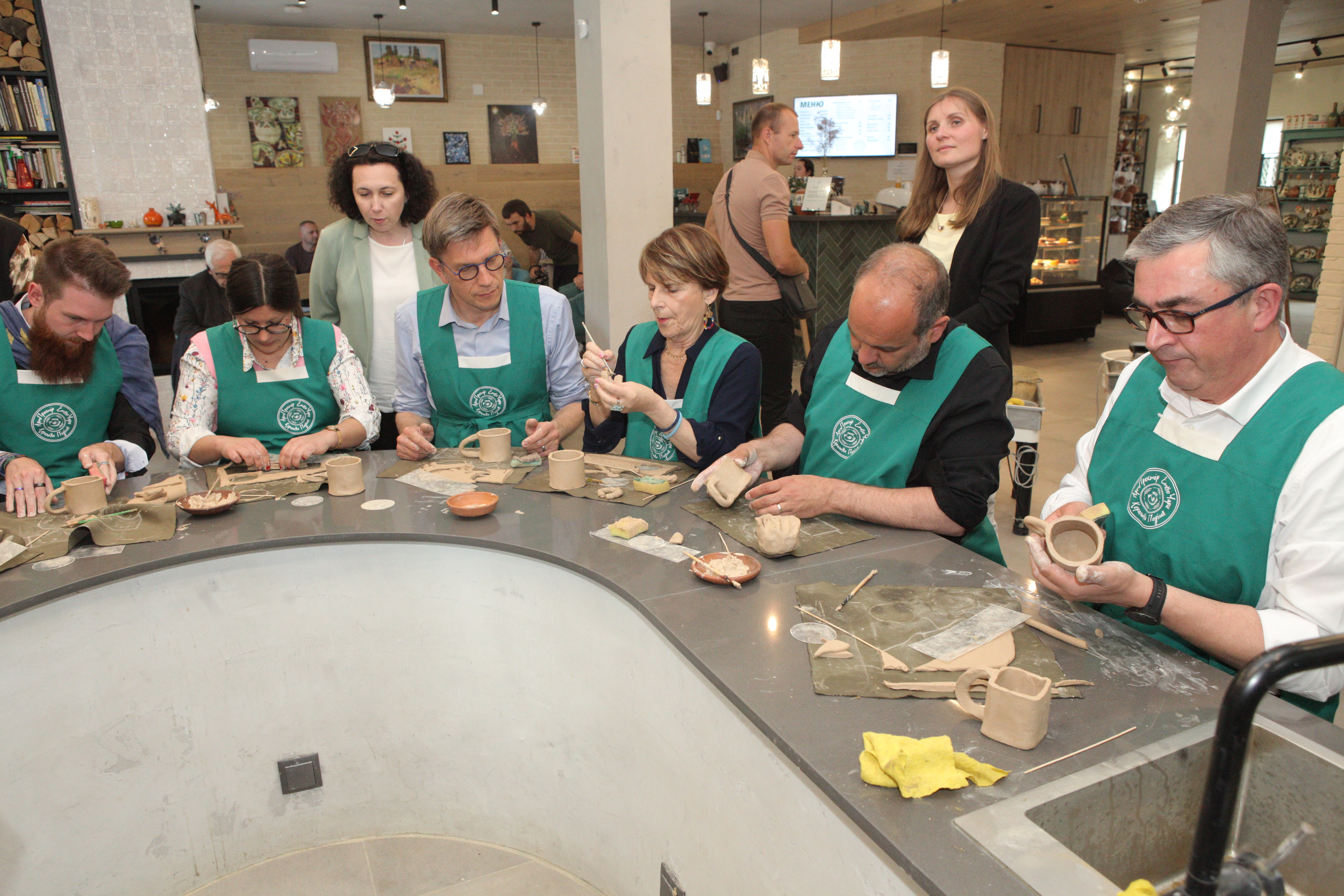
At the end of this working day in Vinnytsia, representatives of the twin cities' delegations had the opportunity to touch the ancient Ukrainian pottery art, which is being nurtured and revived in the EthnoChary Art Space. This place not only preserves the cultural heritage, but also fulfils an important social mission - veterans practice here, for whom clay becomes a means of rehabilitation and recovery. As a memento of the small workshop held in the studio, the participants will have symbolic handmade cups - warm memories of hospitable Vinnytsia and Ukrainian traditions.
Натисніть на зображення, щоб збільшити його
.jpg "Communication with lyceum students")
More news on topics
-
09 June 2026, 13:46
Promoting Sport and Sharing Expertise. Vinnytsia and the Vinnytsia Region Have Signed a Memorandum of Understanding on Cooperation in the Field of Physical Education with the Bourgogne-Franche-Comté Region
-
08 June 2026, 09:51
From Community Resilience to Global Solutions: Vinnytsia Takes Part in the Urban7 Summit in Nancy
-
01 June 2026, 11:04
Young People from Vinnytsia Took Part in an International Forum in Dijon, France
-
21 May 2026, 14:17
Discussions Were Held in Vinnytsia on Strengthening Cooperation with Switzerland in the Field of Water Supply with a View to Improving the Water Treatment System
-
20 May 2026, 11:13
With the Support of Vinnytsia City Council, Young Female Basketball Players Took Part in an International Tournament in the Twin City of Bursa
-
19 May 2026, 11:37
‘Stories that Bring Generations Together’—the VinBookFest Book Festival Took Place in Vinnytsia
Related news
All news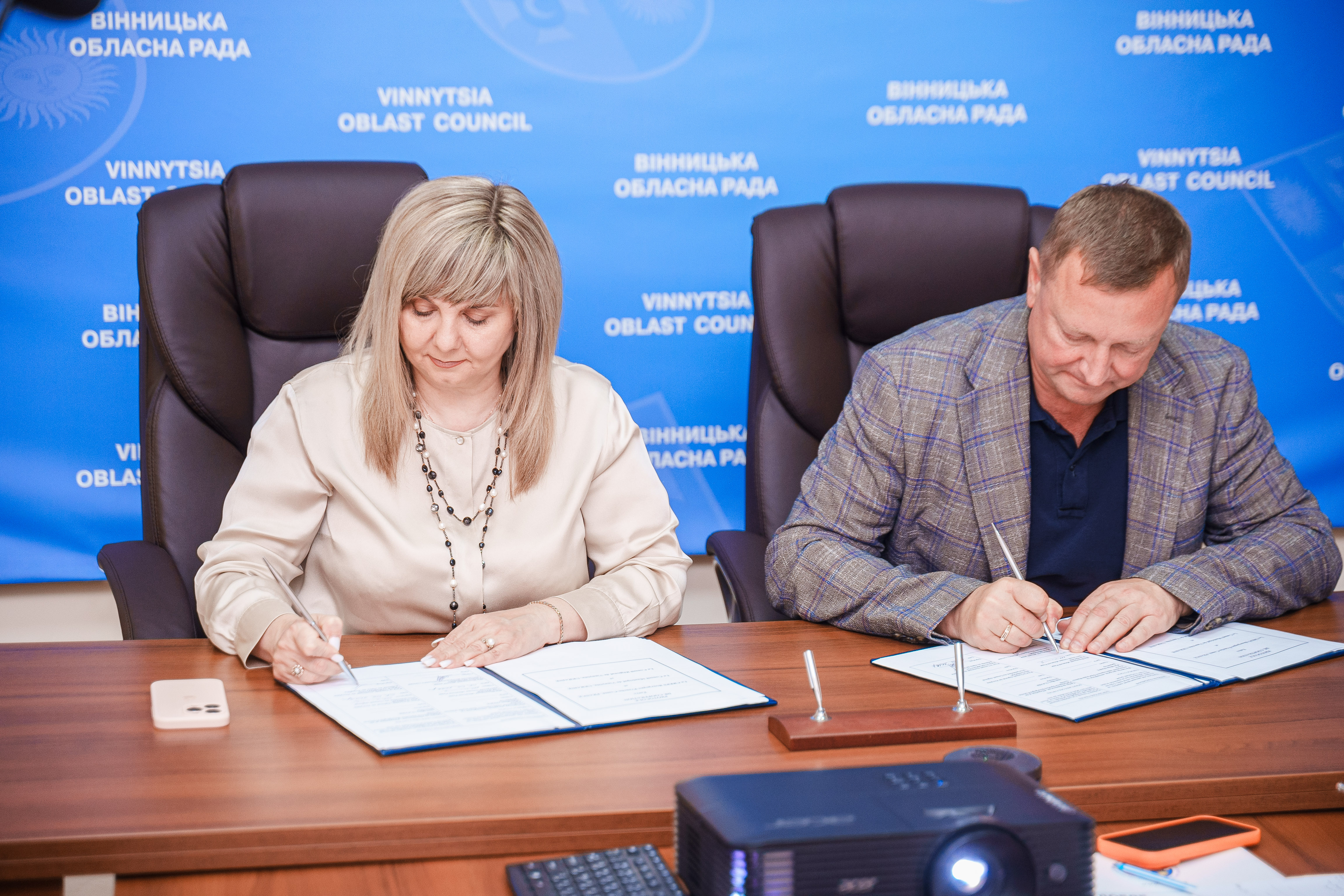
-
08 June 2026, 09:51
From Community Resilience to Global Solutions: Vinnytsia Takes Part in the Urban7 Summit in Nancy
-
01 June 2026, 11:04
Young People from Vinnytsia Took Part in an International Forum in Dijon, France
-
21 May 2026, 14:17
Discussions Were Held in Vinnytsia on Strengthening Cooperation with Switzerland in the Field of Water Supply with a View to Improving the Water Treatment System
-
20 May 2026, 11:13
With the Support of Vinnytsia City Council, Young Female Basketball Players Took Part in an International Tournament in the Twin City of Bursa
-
19 May 2026, 11:37
‘Stories that Bring Generations Together’—the VinBookFest Book Festival Took Place in Vinnytsia
-
18 May 2026, 14:09
Another Friendly Visit of Sister Cities: Vinnytsia, Nancy and Karlsruhe Discussed How Ukraine’s Experience Can Help Europe Prepare for Crises